What ISO 14001 Actually Requires From Waste Businesses
ISO 14001:2015 is the international standard for Environmental Management Systems (EMS). For UK waste operators — transfer stations, skip companies, recycling facilities, AD plants — it’s increasingly a requirement from clients, local authorities, and procurement frameworks.
But the standard is written in broad, system-level language. Translating “documented information” and “operational control” into day-to-day practice is where most businesses struggle.
This article covers the specific clauses that waste operators most commonly need to demonstrate — and how digital tools can turn a paper-heavy compliance burden into something manageable.
The Three ISO 14001 Clauses That Matter Most for Waste Operators
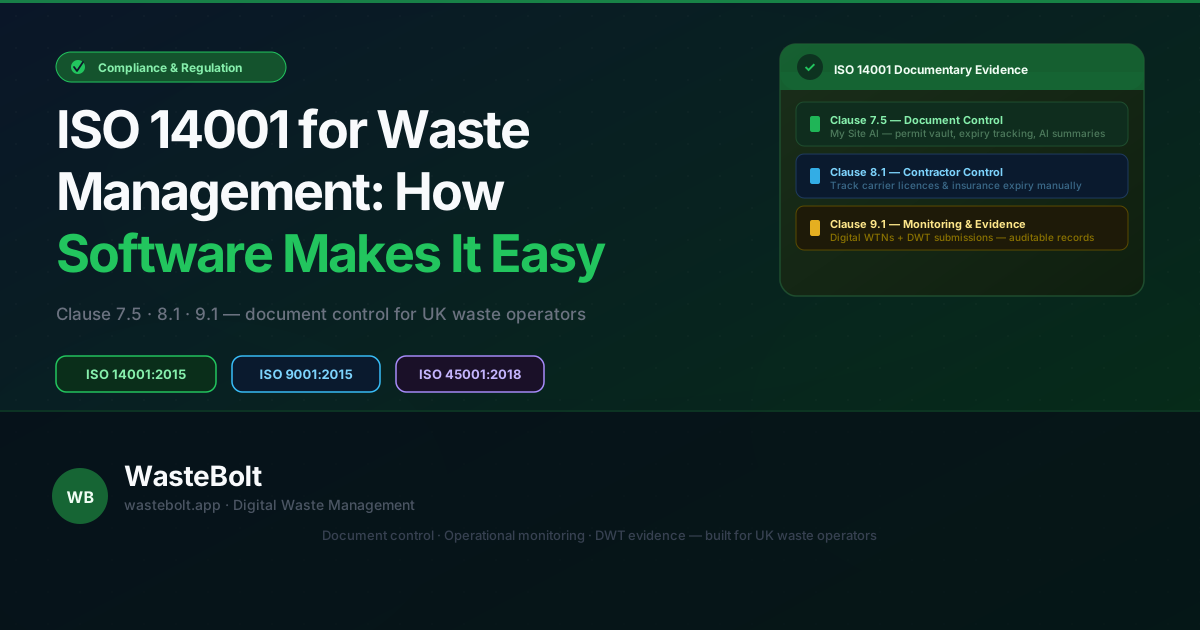
Clause 7.5 — Documented Information
ISO 14001 requires you to maintain documented information that is:
- Available and suitable for use when needed
- Protected from loss of confidentiality and improper use
- Controlled — meaning current versions are in use and outdated versions are not
For a waste business, “documented information” means your environmental permits, PPC permits, waste licences, insurance certificates, carrier licences, risk assessments, and your ISO 14001 certification itself.
In practice, most businesses store these in a shared drive folder, someone’s email, or worse — a physical ring binder. The result is permits that have quietly lapsed, insurance renewals missed by weeks, and auditors asking for documents that nobody can locate.
How WasteBolt helps: My Site AI is a compliance document vault. Upload your permits, insurance, risk assessments, and any other compliance document. The AI extracts the expiry date, summarises the key conditions, and flags documents approaching renewal with colour-coded warnings. When an auditor asks “can I see your current environmental permit?”, it takes 10 seconds, not 10 minutes.
Clause 8.1 — Operational Planning and Control
This clause requires you to establish controls for the environmental aspects of your operations — including the processes you carry out with contractors and suppliers. The standard specifically notes that you must communicate relevant environmental requirements to external providers.
For waste businesses, this means ensuring that every haulier, subcontractor, and on-site operator holds the documentation required to carry out their work legally and responsibly. A contractor whose carrier licence has lapsed, or whose insurance has expired, represents both a legal exposure and an ISO 14001 non-conformance.
In practice: most waste businesses track this manually — a spreadsheet of contractor carrier licences, insurance and permit expiry dates, reviewed on a schedule. There’s no substitute for consistently requesting and checking updated documents before a contractor starts work on your site.
Clause 9.1 — Monitoring, Measurement, Analysis and Evaluation
ISO 14001 requires you to monitor your significant environmental aspects and evaluate your compliance obligations. For a waste operator, this includes demonstrating that waste movements are being tracked, reported, and submitted correctly — particularly in light of mandatory digital waste tracking requirements from October 2026.
How WasteBolt helps: Every waste movement on WasteBolt is timestamped and recorded. Digital WTNs and season tickets create an auditable trail. The Quarterly Waste Return feature generates your EA reporting data directly from your records. And WasteBolt’s DWT integration means your EA submissions are documented and retrievable.
ISO 14001 and the October 2026 DWT Mandate: Two Birds, One Stone
The Environment Agency’s mandatory Digital Waste Tracking (DWT) platform — mandatory for waste receivers from October 2026 — and ISO 14001 compliance often feel like separate workstreams. They’re not.
ISO 14001 clause 9.1 requires evidence that you’re monitoring and evaluating your compliance obligations. The DWT mandate is a compliance obligation. Running your waste movements through WasteBolt means you’re meeting both simultaneously: you have the digital records for ISO 14001 audit evidence, and you’re ready for DWT submission with one click.
WasteBolt is already integrated with the EA’s DWT API. You submit from your existing WTNs — no double-entry, no separate system.
What ISO 14001 Auditors Are Looking For
ISO 14001 auditors don’t expect perfection. They expect a functioning system with evidence that it’s being following. The most common reasons waste businesses fail their ISO 14001 surveillance audits are:
- Expired documents — permits, insurance or carrier licences that have lapsed without being renewed
- No contractor control evidence — no record of checking whether contractors hold valid compliance documentation
- Undocumented processes — procedures exist in someone’s head but aren’t written down or accessible
- Version control failures — outdated versions of documents in use alongside current ones
WasteBolt directly addresses three of these:
- My Site AI tracks document expiry dates and flags upcoming renewals
- Digital WTNs standardise the waste movement process across all drivers and sites
- Centralised vault means there is only one version of each document — the one in WasteBolt
Contractor control evidence (reason 2) still needs its own process — see the note on clause 8.1 above.
Getting Started: What to Upload First
If you’re using WasteBolt to support your ISO 14001 EMS, start with the highest-risk documents:
- Your environmental permit / waste management licence — upload to My Site AI, let it extract the key conditions and expiry date
- Public liability and employer’s liability insurance — track the renewal date
- Your carrier licence (if applicable)
- Risk assessments for your main operational processes
For contractor control, start with your highest-risk contractors — regular hauliers and any contractor working on your permitted site — and set up a process to collect and periodically re-check their carrier licences and insurance certificates.
With those in place, you have the core documentary evidence base that any ISO 14001 auditor will look for first.
Summary
ISO 14001 doesn’t require perfection. It requires a system, evidence that the system is working, and documents that are current and accessible. For UK waste businesses, WasteBolt turns those requirements from an administrative burden into something that happens as a natural by-product of running your operations:
- Digital WTNs → clause 9.1 monitoring evidence
- My Site AI → clause 7.5 document control
- DWT submissions → compliance obligation evidence
If you’re working towards ISO 14001 certification, or preparing for a surveillance audit, WasteBolt gives you the documented information trail you need — without a filing cabinet.